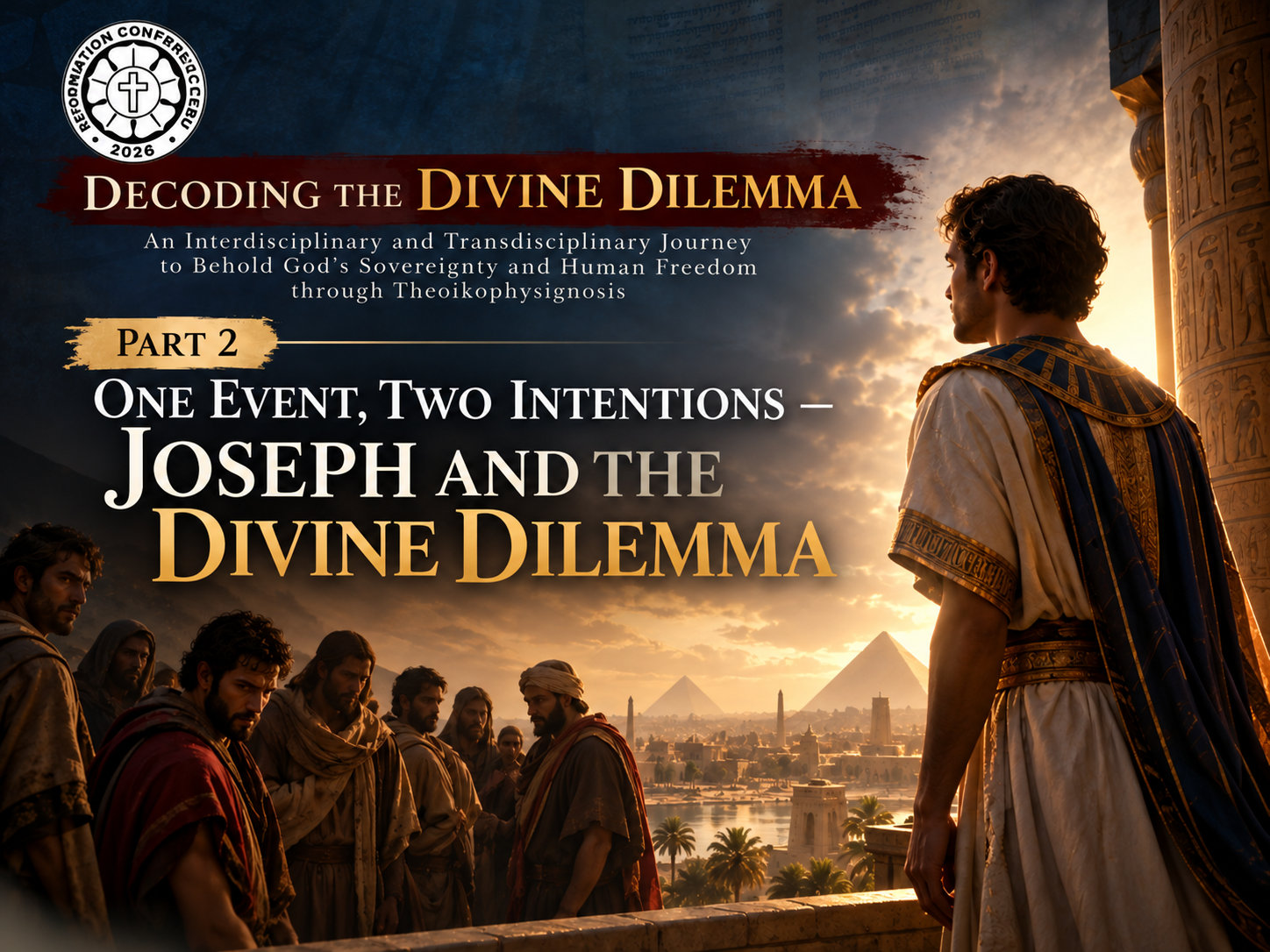
Part 2: One Event, Two Intentions — Joseph and the Divine Dilemma
In Part 1, we asked a difficult question: If God is sovereign over all things, are human beings still genuinely responsible for what they do? The Reformed tradition has consistently answered yes to both truths. God sovereignly governs history, yet human beings remain real moral agents. Few biblical passages place those two realities beside each other more clearly than Joseph’s words to his brothers:
“As for you, you meant evil against me, but God meant it for good…”
— Genesis 50:20
Joseph does not minimize what his brothers did. Their jealousy, betrayal, deception, and cruelty were genuinely sinful. They acted according to their own intentions, and they were responsible for those actions. But Joseph also refuses to describe the event as though God merely arrived afterward and repaired the damage. The same event that the brothers meant for evil, God meant for good.
This is deeply consistent with the Reformed doctrine of providence and divine concurrence. As the Reformers insisted, God is not a distant observer of history. He is the primary cause, sovereignly governing all things, while creatures act as genuine secondary causes according to their own wills, desires, and purposes.
Calvin repeatedly emphasized this point: God’s providence is active, not passive, yet human beings are still accountable for the evil they willingly intend. The Reformed confessions preserve the same balance. God ordains whatsoever comes to pass, yet He is not the author of sin, nor is creaturely responsibility destroyed.
The evil intention belongs to the brothers. The holy and gracious purpose belongs to God. One event. Two intentions. Two very different moral relationships to that event. And yet both are real.
Genesis 50:20 does not remove the tension. It places it before us. Perhaps the question is not whether God acts or man acts. Perhaps the deeper question is how divine and human agency relate without becoming rivals.
Next: Part 3 — Are God and Human Beings Competing Causes?
—————————————————————————————–
The relationship between God’s sovereignty and human responsibility is not merely a theological puzzle to be discussed, it touches the very way we understand providence, choice, accountability, suffering, and the unfolding of our lives before God.
If this short article has stirred in you a desire to explore more deeply how divine sovereignty, human agency, concurrence, and secondary causation may be understood together, continue the journey with us at Reformation Conference Cebu 2026. When selecting your breakout session, choose: DECODING THE DIVINE DILEMMA
Explore how the Reformed doctrine of providence and divine concurrence provides the theological foundation for thinking about God as the primary cause while human beings remain genuine secondary causes and morally responsible agents. The session will also introduce Theoikophysignosis as an interdisciplinary framework for illuminating this enduring theological tension without reducing mystery to mechanism, or allowing interdisciplinary models to displace the authority and priority of biblical theology.
Continue the Journey at Reformation Conference Cebu 2026
𝐁𝐄𝐇𝐎𝐋𝐃 𝐎𝐔𝐑 𝐆𝐎𝐃 𝟐𝟎𝟐𝟔
October 21–23, 2026
Hosted by Bradford United Church of Christ, Inc.
𝗥𝗘𝗚𝗜𝗦𝗧𝗘𝗥 𝗛𝗘𝗥𝗘:
https://forms.gle/fzGFvqpBn2ceztfs9
𝗥𝗘𝗚𝗨𝗟𝗔𝗥 𝗥𝗔𝗧𝗘:
Php 1,000.00
September 1–October 15
Registration is inclusive of the conference kit only. Food and accommodation are not included.
Come and behold the glory of our ever-present God through the faithful proclamation of His Word, Christ-centered worship, and fellowship with His Church.