Part 1: If God Is Sovereign, Are We Really Responsible?
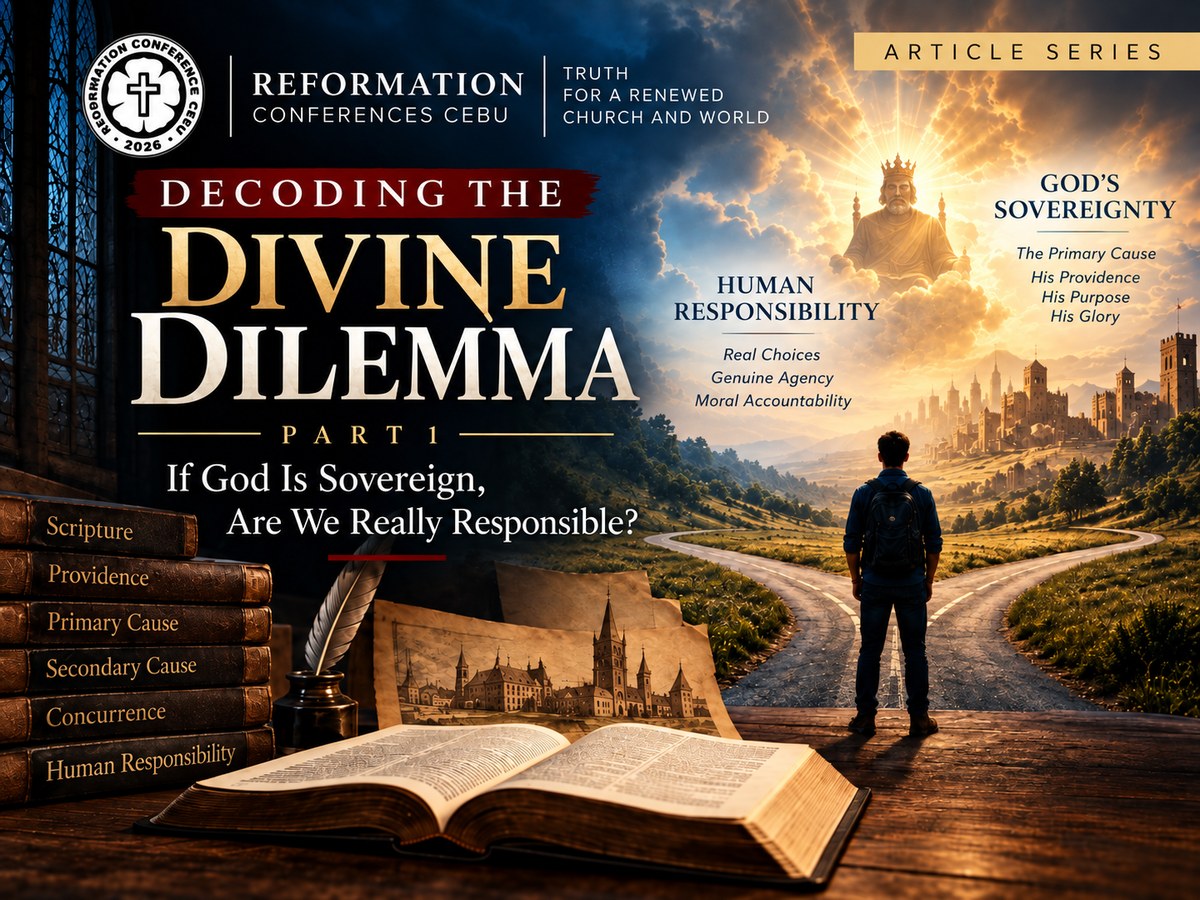
Few questions have occupied Christian theology as persistently as the relationship between divine sovereignty and human responsibility. The Reformed tradition has never been embarrassed to affirm both.God is sovereign. He ordains whatsoever comes to pass according to His wise and holy counsel. His providence extends over creation, history, nations, rulers, ordinary events, and human actions.
Yet Scripture also treats human beings as genuine moral agents. We choose. We intend. We obey. We rebel. We are accountable before God for what we do. So how can both be true?
Classical Reformed theology has often addressed this through the doctrine of divine concurrence. God is the primary cause, sustaining and governing all things, while creatures act as genuine secondary causes according to their own natures, desires, intentions, and faculties. That language is important.
It means that when a human being acts, God’s sovereignty does not necessarily replace human agency. Nor does human agency require independence from God. But that immediately raises another question. If God is the primary cause and human beings are secondary causes, how exactly do these two levels of causation relate? Does divine causation overwhelm creaturely causation? Does God act first and man merely follow? Or can one event be fully under divine providence while also being a genuinely human action for which the person remains morally responsible?
This is where the mystery deepens. The Reformed doctrine of concurrence gives us important theological grammar, but the relationship between sovereignty and responsibility still presses on the mind. Perhaps the problem becomes especially difficult when we imagine God and creatures as though they were competing causes operating on the same plane.
But what if they are not competitors? What if divine and human agency can both be real without being rival explanations?
That question will guide this series. And Scripture gives us one extraordinary place to begin: a story in which sinful human intention and sovereign divine purpose converge in the very same event. – The story of Joseph.
Next: Part 2 — One Event, Two Intentions: The Puzzle of Joseph
—————————————————————————————–
The relationship between God’s sovereignty and human responsibility is not merely a theological puzzle to be discussed, it touches the very way we understand providence, choice, accountability, suffering, and the unfolding of our lives before God.
If this short article has stirred in you a desire to explore more deeply how divine sovereignty, human agency, concurrence, and secondary causation may be understood together, continue the journey with us at Reformation Conference Cebu 2026.
When selecting your breakout session, choose: DECODING THE DIVINE DILEMMA
Explore how the Reformed doctrine of providence and divine concurrence provides the theological foundation for thinking about God as the primary cause while human beings remain genuine secondary causes and morally responsible agents. The session will also introduce Theoikophysignosis as an interdisciplinary framework for illuminating this enduring theological tension without reducing mystery to mechanism, or allowing interdisciplinary models to displace the authority and priority of biblical theology.
Continue the Journey at Reformation Conference Cebu 2026
𝐁𝐄𝐇𝐎𝐋𝐃 𝐎𝐔𝐑 𝐆𝐎𝐃 𝟐𝟎𝟐𝟔
October 21–23, 2026
Hosted by Bradford United Church of Christ, Inc.
𝗥𝗘𝗚𝗜𝗦𝗧𝗘𝗥 𝗛𝗘𝗥𝗘:
https://forms.gle/fzGFvqpBn2ceztfs9
𝗥𝗘𝗚𝗨𝗟𝗔𝗥 𝗥𝗔𝗧𝗘:
Php 1,000.00
September 1–October 15
Registration is inclusive of the conference kit only. Food and accommodation are not included.
Come and behold the glory of our ever-present God through the faithful proclamation of His Word, Christ-centered worship, and fellowship with His Church.