What happens to our status when we are saved?
When we think of the blessings of salvation, one of the doctrines most familiar to us is justification. In justification, God pardons our sins and declares us righteous on the basis of the righteousness of Christ. But salvation does not stop with pardon. The gospel not only brings us from condemnation to justification; it also brings us from alienation into fellowship, from slavery into sonship, and from being strangers to becoming members of God’s household.
In Christ, we are not merely forgiven, we are welcomed into the family of God.
The Westminster Confession of Faith beautifully describes this grace of adoption, declaring that all those who are justified are also received “into the number, and enjoy the liberties and privileges of the children of God.” Likewise, the 1689 Baptist Confession teaches that believers are granted “the grace of adoption,” by which they are numbered among the children of God, receive His name, enjoy access to His throne of grace, and are enabled to cry, “Abba, Father.”
This is the wonderful truth we will explore in this session.
Divine adoption may be understood as the gracious change of our status and condition from alienation and hostility to acceptance and favor through the saving work of the Father, the Son, and the Holy Spirit. It is deeply Trinitarian.
In Ephesians 1:3–6, we see the Father’s plan for our adoption. Before the foundation of the world, God chose His people in Christ and, “in love,” predestined them “for adoption to himself as sons through Jesus Christ.” Our adoption is not an afterthought in the plan of salvation. It flows from the eternal love and gracious purpose of God.
In Galatians 4:4–7, we see the Son’s provision for our adoption. Christ came “to redeem those who were under the law, so that we might receive adoption as sons.” The eternal Son became man so that sinners might become sons and daughters of God by grace. As John Calvin emphasized, our sonship is never independent of Christ; it is only in union with the beloved Son that we become children of the Father.
Then in Romans 8:14–17, we see the Spirit’s proof of our adoption. We have not received “the spirit of slavery to fall back into fear,” but “the Spirit of adoption as sons, by whom we cry, ‘Abba! Father!’” The Spirit bears witness that we belong to God and assures us that, as His children, we are also heirs “heirs of God and fellow heirs with Christ.”
This truth changes how we live.
We now possess a new identity: “See what kind of love the Father has given to us, that we should be called children of God” (1 John 3:1). We may approach God with confidence (Hebrews 4:14–16), trust His fatherly provision (Matthew 6:25–34), receive His discipline as evidence of His love (Hebrews 12:7–8), and rest in the promise that nothing in our lives falls outside His wise and fatherly care.
For us Filipinos, who deeply value family, this doctrine carries particular warmth and weight. Earthly fathers may fail us. Families may disappoint us. We may experience rejection, loss, inadequacy, or fear. Yet the believer possesses something infinitely greater: an eternal Father who has loved us in His Son and will never abandon His children.
Adoption reminds us that the gospel’s relational glory is this: sinners are not merely pardoned—they are embraced.
From sinners and slaves, we are made beloved sons and daughters through the Beloved. From objects of wrath, we become objects of divine favor and fatherly love.
What a blessing!
Come and behold with us the greatness and the goodness of our God—the Father who planned our adoption, the Son who purchased it, and the Spirit who assures us that we truly belong to Him.
The reality of our adoption into God’s family is not merely a theological doctrine to be discussed; it confronts us with profound questions about God’s grace, love, mercy, and our new identity in Christ. What does it truly mean to be called a child of God? How can sinners who were once alienated from God, under His righteous condemnation, and enslaved to sin now enjoy the privileges of being His beloved sons and daughters? What does it mean to have God not only as our Creator, Lord, and Redeemer, but also as our heavenly Father? And how should this wonderful truth transform our prayer life, our relationship with Him, our response to suffering, and the way we live as members of His eternal family?
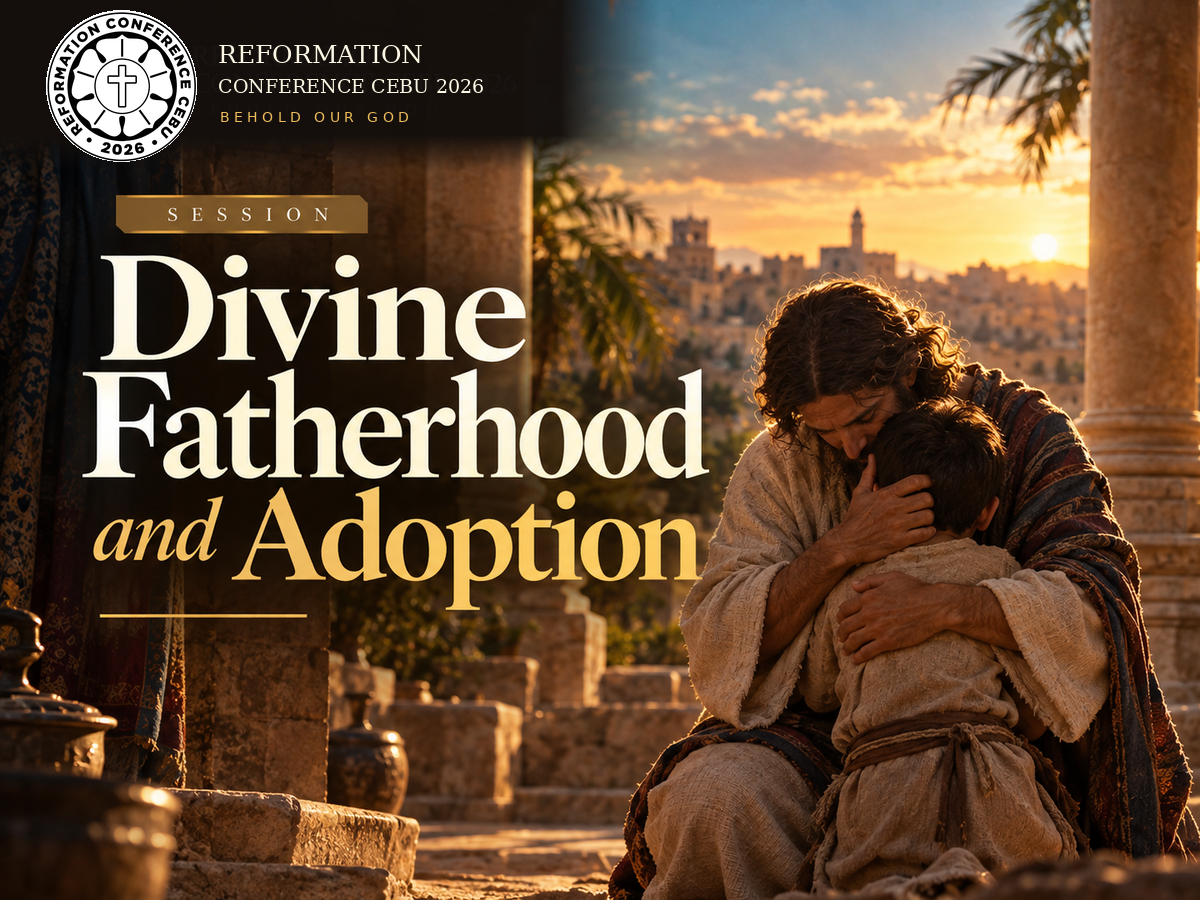
If this short article has stirred in you a desire to explore more deeply the riches of God’s grace in adoption, the privileges of belonging to His family, and the assurance of His fatherly love and care, continue the journey with us at Reformation Conference Cebu 2026. When selecting your breakout session, choose: DIVINE FATHERHOOD AND ADOPTION.
Explore how Scripture, understood through the rich theological heritage of the Protestant Reformation, reveals the wonderful truth that salvation does not merely bring forgiveness of sins and justification before God, but also the gracious privilege of becoming His children through union with Jesus Christ. Discover how the Reformed confessions describe adoption as a precious blessing of salvation, granting believers access to the Father, the privileges of sonship, His loving discipline, and the promise of an eternal inheritance with Christ. Above all, behold how the God who once stood against us in righteous judgment has graciously welcomed us into His family through His beloved Son. For those who belong to Christ, adoption is not merely a change in legal standing, but the beginning of a wonderful relationship of intimacy, communion, assurance, and everlasting fellowship with our heavenly Father.
Continue the Journey at Reformation Conference Cebu 2026
𝐁𝐄𝐇𝐎𝐋𝐃 𝐎𝐔𝐑 𝐆𝐎𝐃 𝟐𝟎𝟐𝟔
October 21–23, 2026
Hosted by Bradford United Church of Christ, Inc.
𝗥𝗘𝗚𝗜𝗦𝗧𝗘𝗥 𝗛𝗘𝗥𝗘:
https://forms.gle/fzGFvqpBn2ceztfs9
𝗥𝗘𝗚𝗨𝗟𝗔𝗥 𝗥𝗔𝗧𝗘:
Php 1,000.00
September 1–October 15, 2026
Registration is inclusive of the conference kit only. Food and accommodation are not included.
Come and behold the glory of our gracious and loving heavenly Father through the faithful proclamation of His Word, Christ-centered worship, and fellowship with His Church. Together, let us marvel at the Father who chose us in love, the Son who redeemed us so that we might receive adoption, and the Holy Spirit who assures us that we are truly God’s children. Let us rejoice in the wonderful truth that, through Jesus Christ, we are no longer strangers and slaves, but beloved sons and daughters, welcomed into God’s eternal family, embraced by His unfailing love, and made heirs of His glorious promises.
What a blessing to know that the sovereign God of the universe is also our loving heavenly Father!