Reformation Conference Cebu logo RefCon Cebu

Category: RefCon Cebu 2026

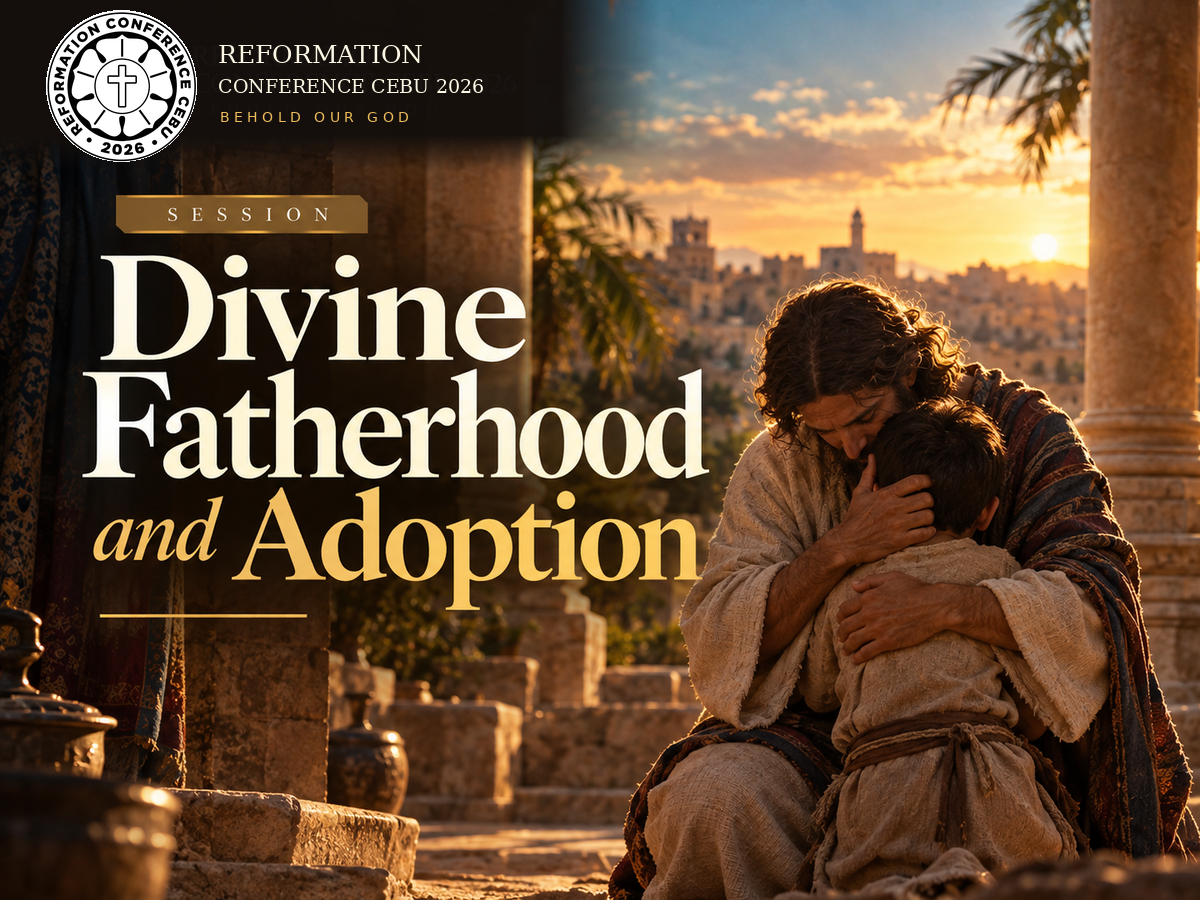
  • Divine Fatherhood and Adoption – (Breakout session overview)

    Divine Fatherhood and Adoption – (Breakout session overview)

    What happens to our status when we are saved?

    When we think of the blessings of salvation, one of the doctrines most familiar to us is justification. In justification, God pardons our sins and declares us righteous on the basis of the righteousness of Christ. But salvation does not stop with pardon. The gospel not only brings us from condemnation to justification; it also brings us from alienation into fellowship, from slavery into sonship, and from being strangers to becoming members of God’s household.

    In Christ, we are not merely forgiven, we are welcomed into the family of God.

    The Westminster Confession of Faith beautifully describes this grace of adoption, declaring that all those who are justified are also received “into the number, and enjoy the liberties and privileges of the children of God.” Likewise, the 1689 Baptist Confession teaches that believers are granted “the grace of adoption,” by which they are numbered among the children of God, receive His name, enjoy access to His throne of grace, and are enabled to cry, “Abba, Father.”

    This is the wonderful truth we will explore in this session.

    Divine adoption may be understood as the gracious change of our status and condition from alienation and hostility to acceptance and favor through the saving work of the Father, the Son, and the Holy Spirit. It is deeply Trinitarian.

    In Ephesians 1:3–6, we see the Father’s plan for our adoption. Before the foundation of the world, God chose His people in Christ and, “in love,” predestined them “for adoption to himself as sons through Jesus Christ.” Our adoption is not an afterthought in the plan of salvation. It flows from the eternal love and gracious purpose of God.

    In Galatians 4:4–7, we see the Son’s provision for our adoption. Christ came “to redeem those who were under the law, so that we might receive adoption as sons.” The eternal Son became man so that sinners might become sons and daughters of God by grace. As John Calvin emphasized, our sonship is never independent of Christ; it is only in union with the beloved Son that we become children of the Father.

    Then in Romans 8:14–17, we see the Spirit’s proof of our adoption. We have not received “the spirit of slavery to fall back into fear,” but “the Spirit of adoption as sons, by whom we cry, ‘Abba! Father!’” The Spirit bears witness that we belong to God and assures us that, as His children, we are also heirs “heirs of God and fellow heirs with Christ.”

    This truth changes how we live.

    We now possess a new identity: “See what kind of love the Father has given to us, that we should be called children of God” (1 John 3:1). We may approach God with confidence (Hebrews 4:14–16), trust His fatherly provision (Matthew 6:25–34), receive His discipline as evidence of His love (Hebrews 12:7–8), and rest in the promise that nothing in our lives falls outside His wise and fatherly care.

    For us Filipinos, who deeply value family, this doctrine carries particular warmth and weight. Earthly fathers may fail us. Families may disappoint us. We may experience rejection, loss, inadequacy, or fear. Yet the believer possesses something infinitely greater: an eternal Father who has loved us in His Son and will never abandon His children.

    Adoption reminds us that the gospel’s relational glory is this: sinners are not merely pardoned—they are embraced.

    From sinners and slaves, we are made beloved sons and daughters through the Beloved. From objects of wrath, we become objects of divine favor and fatherly love.

    What a blessing!

    Come and behold with us the greatness and the goodness of our God—the Father who planned our adoption, the Son who purchased it, and the Spirit who assures us that we truly belong to Him.


    The reality of our adoption into God’s family is not merely a theological doctrine to be discussed; it confronts us with profound questions about God’s grace, love, mercy, and our new identity in Christ. What does it truly mean to be called a child of God? How can sinners who were once alienated from God, under His righteous condemnation, and enslaved to sin now enjoy the privileges of being His beloved sons and daughters? What does it mean to have God not only as our Creator, Lord, and Redeemer, but also as our heavenly Father? And how should this wonderful truth transform our prayer life, our relationship with Him, our response to suffering, and the way we live as members of His eternal family?

    If this short article has stirred in you a desire to explore more deeply the riches of God’s grace in adoption, the privileges of belonging to His family, and the assurance of His fatherly love and care, continue the journey with us at Reformation Conference Cebu 2026. When selecting your breakout session, choose: DIVINE FATHERHOOD AND ADOPTION.

    Explore how Scripture, understood through the rich theological heritage of the Protestant Reformation, reveals the wonderful truth that salvation does not merely bring forgiveness of sins and justification before God, but also the gracious privilege of becoming His children through union with Jesus Christ.  Discover how the Reformed confessions describe adoption as a precious blessing of salvation, granting believers access to the Father, the privileges of sonship, His loving discipline, and the promise of an eternal inheritance with Christ. Above all, behold how the God who once stood against us in righteous judgment has graciously welcomed us into His family through His beloved Son. For those who belong to Christ, adoption is not merely a change in legal standing, but the beginning of a wonderful relationship of intimacy, communion, assurance, and everlasting fellowship with our heavenly Father.

    Continue the Journey at Reformation Conference Cebu 2026

    𝐁𝐄𝐇𝐎𝐋𝐃 𝐎𝐔𝐑 𝐆𝐎𝐃 𝟐𝟎𝟐𝟔

    October 21–23, 2026

    Hosted by Bradford United Church of Christ, Inc.

    𝗥𝗘𝗚𝗜𝗦𝗧𝗘𝗥 𝗛𝗘𝗥𝗘:

    https://forms.gle/fzGFvqpBn2ceztfs9

    𝗥𝗘𝗚𝗨𝗟𝗔𝗥 𝗥𝗔𝗧𝗘:

    Php 1,000.00

    September 1–October 15, 2026

    Registration is inclusive of the conference kit only. Food and accommodation are not included.

    Come and behold the glory of our gracious and loving heavenly Father through the faithful proclamation of His Word, Christ-centered worship, and fellowship with His Church. Together, let us marvel at the Father who chose us in love, the Son who redeemed us so that we might receive adoption, and the Holy Spirit who assures us that we are truly God’s children. Let us rejoice in the wonderful truth that, through Jesus Christ, we are no longer strangers and slaves, but beloved sons and daughters, welcomed into God’s eternal family, embraced by His unfailing love, and made heirs of His glorious promises.

    What a blessing to know that the sovereign God of the universe is also our loving heavenly Father!
  • Decoding the Divine Dilemma – Part 4 (Breakout session overview)

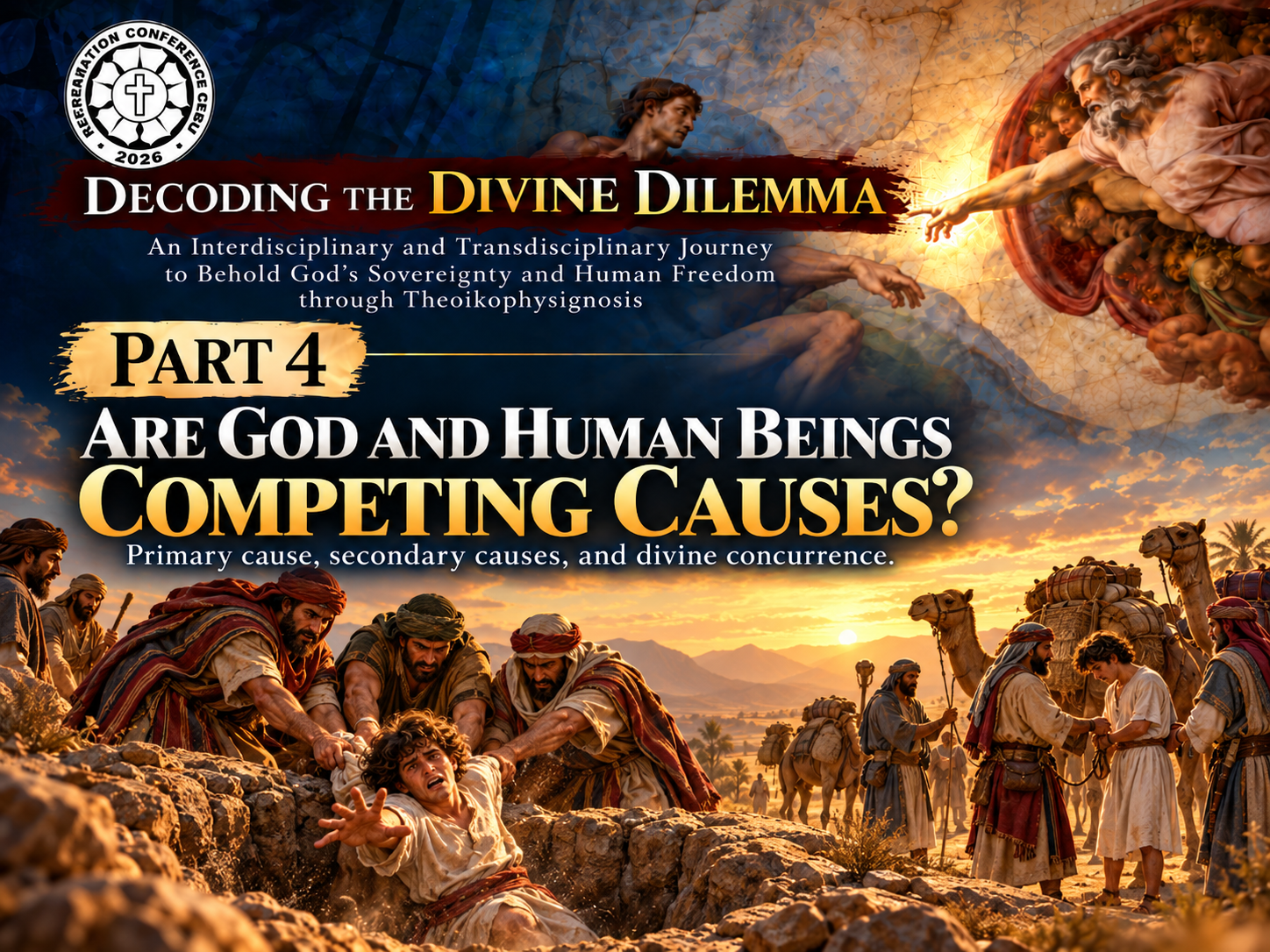
    Decoding the Divine Dilemma – Part 4 (Breakout session overview)

    Part 4: Are God and Human Beings Competing Causes?

    In Part 3, we asked a more foundational question: What kind of God governs history?

    We considered the God of Scripture as omniscient, omnipotent, wise, holy, transcendent, and utterly distinct from His creation. That Creator-creature distinction matters because one of the easiest mistakes to make in thinking about divine sovereignty and human responsibility is to imagine God and human beings as though they were two causes competing on the same level. If God does more, must man necessarily do less? If God is fully sovereign, must human agency become less real? The Reformed tradition has consistently answered: No.

    Scripture itself gives us the theological grammar. Paul declares that God “works all things according to the counsel of his will” (Ephesians 1:11), while Proverbs can simultaneously say, “The heart of man plans his way, but the LORD establishes his steps” (Proverbs 16:9). Human beings plan. Human beings choose. And God sovereignly governs. This is where the classical theolgoical distinction between primary and secondary causation becomes important.

    God is the primary cause—the Creator, Sustainer, and sovereign Governor of all things. Human beings, however, are genuine secondary causes. We think, desire, deliberate, intend, choose, act, obey, rebel, and remain responsible for what we do.

    The Westminster Confession expresses this balance carefully: “God, from all eternity, did, by the most wise and holy counsel of his own will, freely, and unchangeably ordain whatsoever comes to pass.”

    Yet it immediately adds that God is not “the author of sin,” nor is violence done to the creaturely will. The confession later speaks even more directly of secondary causes, affirming that God orders events to occur “according to the nature of second causes, either necessarily, freely, or contingently.”

    This is not fatalism. Nor is it a picture of human beings as puppets. It is the doctrine of divine concurrence: God sovereignly sustains and governs creaturely action while creatures genuinely act according to their own natures, desires, intentions, and faculties.

    Calvin likewise refused to picture providence as God merely watching history unfold from a distance. He wrote that “nothing happens but what he has knowingly and willingly decreed.” Yet Calvin was equally insistent that the wickedness of sinful actions belongs to the creature, not to God.

    That takes us back to Joseph. His brothers truly intended evil. Their jealousy and betrayal were their own. Yet Joseph could still say: “You meant evil against me, but God meant it for good.” — Genesis 50:20

    One event. Two intentions. Two forms of agency. But not two rival gods fighting for control of history.

    The same pattern appears in Acts 2:23. Jesus was “delivered up according to the definite plan and foreknowledge of God,” yet those who crucified Him were still morally accountable for what they did.

    Divine sovereignty does not erase human responsibility. Human responsibility does not place events outside divine sovereignty. Perhaps, then, we have been imagining the problem incorrectly. If God and creatures are not rival causes operating on the same plane, could the same event be truthfully described at more than one level? Could an action be described theologically, morally, psychologically, historically, and even probabilistically without those descriptions cancelling one another?

    That question brings us another step closer to the interdisciplinary territory behind Theoikophysignosis. But we are not ready to unveil the framework yet. First we need to ask whether looking at the same reality from different levels might help us understand how divine and human agency can both be affirmed without collapsing one into the other.

    Next: Part 5 — What If We Are Looking at the Same Reality from Different Levels?

    —————————————————————————————––
    The relationship between God’s sovereignty and human responsibility is not merely a theological puzzle to be discussed, it touches the very way we understand providence, choice, accountability, suffering, and the unfolding of our lives before God.

    If this short article has stirred in you a desire to explore more deeply how divine sovereignty, human agency, concurrence, and secondary causation may be understood together, continue the journey with us at Reformation Conference Cebu 2026. When selecting your breakout session, choose: DECODING THE DIVINE DILEMMA

    Explore how the Reformed doctrine of providence and divine concurrence provides the theological foundation for thinking about God as the primary cause while human beings remain genuine secondary causes and morally responsible agents. The session will also introduce Theoikophysignosis as an interdisciplinary framework for illuminating this enduring theological tension without reducing mystery to mechanism, or allowing interdisciplinary models to displace the authority and priority of biblical theology.

    Continue the Journey at Reformation Conference Cebu 2026

    𝐁𝐄𝐇𝐎𝐋𝐃 𝐎𝐔𝐑 𝐆𝐎𝐃 𝟐𝟎𝟐𝟔
    October 21–23, 2026
    Hosted by Bradford United Church of Christ, Inc.

    𝗥𝗘𝗚𝗜𝗦𝗧𝗘𝗥 𝗛𝗘𝗥𝗘:
    https://forms.gle/fzGFvqpBn2ceztfs9

    𝗥𝗘𝗚𝗨𝗟𝗔𝗥 𝗥𝗔𝗧𝗘:
    Php 1,000.00
    September 1–October 15

    Registration is inclusive of the conference kit only. Food and accommodation are not included.

    Come and behold the glory of our ever-present God through the faithful proclamation of His Word, Christ-centered worship, and fellowship with His Church.

  • The God Who Knows All Things: Understanding God’s Omniscience – (Breakout Session overview)

    The God Who Knows All Things: Understanding God’s Omniscience – (Breakout Session overview)

    Have you ever wondered, “Is there anything about me that God does not know?”

    He knows our thoughts before we speak, our struggles that no one else sees, our failures we try to hide, and even the desires deep within our hearts. Nothing is hidden from His sight, nothing escapes His knowledge, and nothing ever surprises Him.

    God’s omniscience means that He knows all things perfectly, eternally, and without limitation. He does not learn, discover, or gain new information. His knowledge is infinite and infallible. As Psalm 139 teaches, God knows our thoughts, words, actions, and hearts completely: “Even before a word is on my tongue, behold, O LORD, you know it altogether” (Psalm 139:4).

    This is also why the Reformed tradition has always connected God’s perfect knowledge with His sovereign rule over all things. God does not simply look ahead through history and discover what will happen. He knows the end from the beginning because all things stand before Him and unfold according to His eternal wisdom and purpose.

    John Calvin strongly rejected the idea that God merely watches history from a distance. Speaking of divine providence, Calvin wrote that “nothing happens but what he has knowingly and willingly decreed.” For Calvin, God’s knowledge is not the passive observation of a distant spectator. The God who perfectly knows His creation is also the God who wisely and sovereignly governs it.

    This truth reminds us of God’s infinite wisdom and sovereignty, teaching us to trust Him even when we cannot understand our circumstances. What is confusing to us is never confusing to God. What appears unexpected to us has never taken Him by surprise. As creatures, our knowledge is limited, fragmented, and dependent. God’s knowledge is perfect, eternal, and independent.

    This should humble us.

    We cannot hide our sins behind appearances, excuses, or carefully constructed images of ourselves. Hebrews 4:13 reminds us that “nothing in creation is hidden from his sight.” God sees us as we truly are. His omniscience therefore calls us to live with humility, holiness, repentance, and integrity before Him.

    Yet God’s perfect knowledge is not only a reason for reverence. For those who belong to Christ, it is also a profound source of comfort.

    The God who knows all things knows every sorrow we carry, every temptation we face, every prayer we struggle to express, and every burden that others may never see. He knows our weaknesses better than we know them ourselves. And still, according to His grace, He has set His love upon His people.

    The Reformers repeatedly directed troubled consciences away from confidence in themselves and toward the promises of God in Christ. Our comfort does not rest in how well we understand ourselves, how strongly we hold on to God, or how perfectly we can explain His purposes. Our comfort rests in the God who knows His own, keeps His promises, and accomplishes His saving purposes in Jesus Christ.

    Ultimately, God’s omniscience points us to Christ. The God who knows every hidden sin has provided the Savior who bears the guilt of His people. Through Christ, we do not need to flee from the all-knowing God; we may draw near to Him. In Christ, sinners are forgiven, reconciled, and welcomed into the presence of the very God before whom nothing is hidden.

    There is therefore something deeply comforting about being completely known by God.

    He knows the sins we confess.
    He knows the struggles we cannot explain.
    He knows the suffering no one else sees.
    He knows our beginning and our end.
    And He knows perfectly how His purposes will be accomplished.

    Because God knows us completely, we can live honestly before Him, trust His wisdom when we cannot understand His ways, and rest in His sovereign grace.

    The God who knows all things is the God who rules all things and, in Jesus Christ, He is the God in whom His people may confidently rest.


    The reality of God’s omniscience is not merely a theological doctrine to be discussed; it confronts us with profound questions about God’s infinite knowledge, wisdom, sovereignty, and our own lives before Him. What does it mean that God knows all things perfectly and eternally? Does God merely foresee what will happen, or is His perfect knowledge inseparably connected with His sovereign purposes? How should we live knowing that every thought, word, action, and even the deepest intentions of our hearts are fully known to Him? And how can this truth, which should fill us with reverence and humility, also become a source of profound comfort and assurance?

    If this short article has stirred in you a desire to explore more deeply the nature of God’s omniscience, His eternal and exhaustive knowledge of all things, and the relationship between His perfect knowledge, sovereign providence, and our daily lives, continue the journey with us at Reformation Conference Cebu 2026. When selecting your breakout session, choose: DIVINE OMNISCIENCE.

    Explore how Scripture, understood through the rich theological heritage of the Protestant Reformation, reveals the God whose knowledge is infinite, infallible, eternal, and independent of His creation. Drawing insights from the Scriptures and the reflection of the Reformers, the session will examine how God’s omniscience is inseparably connected with His wisdom, sovereignty, and providence. Discover why nothing surprises God, why nothing escapes His knowledge, and why His people can trust Him even when His purposes remain beyond their understanding. Above all, behold how the God who knows us completely, including our deepest sins and weaknesses, has graciously provided salvation and assurance through Jesus Christ. For those who belong to Christ, being fully known by God is not merely a reason for reverence, but a wonderful assurance of His unfailing love, wisdom, and faithfulness.

    Continue the Journey at Reformation Conference Cebu 2026

    𝐁𝐄𝐇𝐎𝐋𝐃 𝐎𝐔𝐑 𝐆𝐎𝐃 𝟐𝟎𝟐𝟔

    October 21–23, 2026

    Hosted by: Bradford United Church of Christ, Inc.

    𝗥𝗘𝗚𝗜𝗦𝗧𝗘𝗥 𝗛𝗘𝗥𝗘: https://forms.gle/fzGFvqpBn2ceztfs9

    𝗥𝗘𝗚𝗨𝗟𝗔𝗥 𝗥𝗔𝗧𝗘: Php 1,000.00**

    September 1–October 15, 2026

    *Registration is inclusive of the conference kit only. Food and accommodation are not included.*

    Come and behold the glory of our all-knowing, all-wise, and sovereign God through the faithful proclamation of His Word, Christ-centered worship, and fellowship with His Church. Together, let us marvel at the God from whom nothing is hidden, whose wisdom knows no limits, and whose perfect knowledge assures us that we are never forgotten, never beyond His care, and never outside His sovereign purposes.

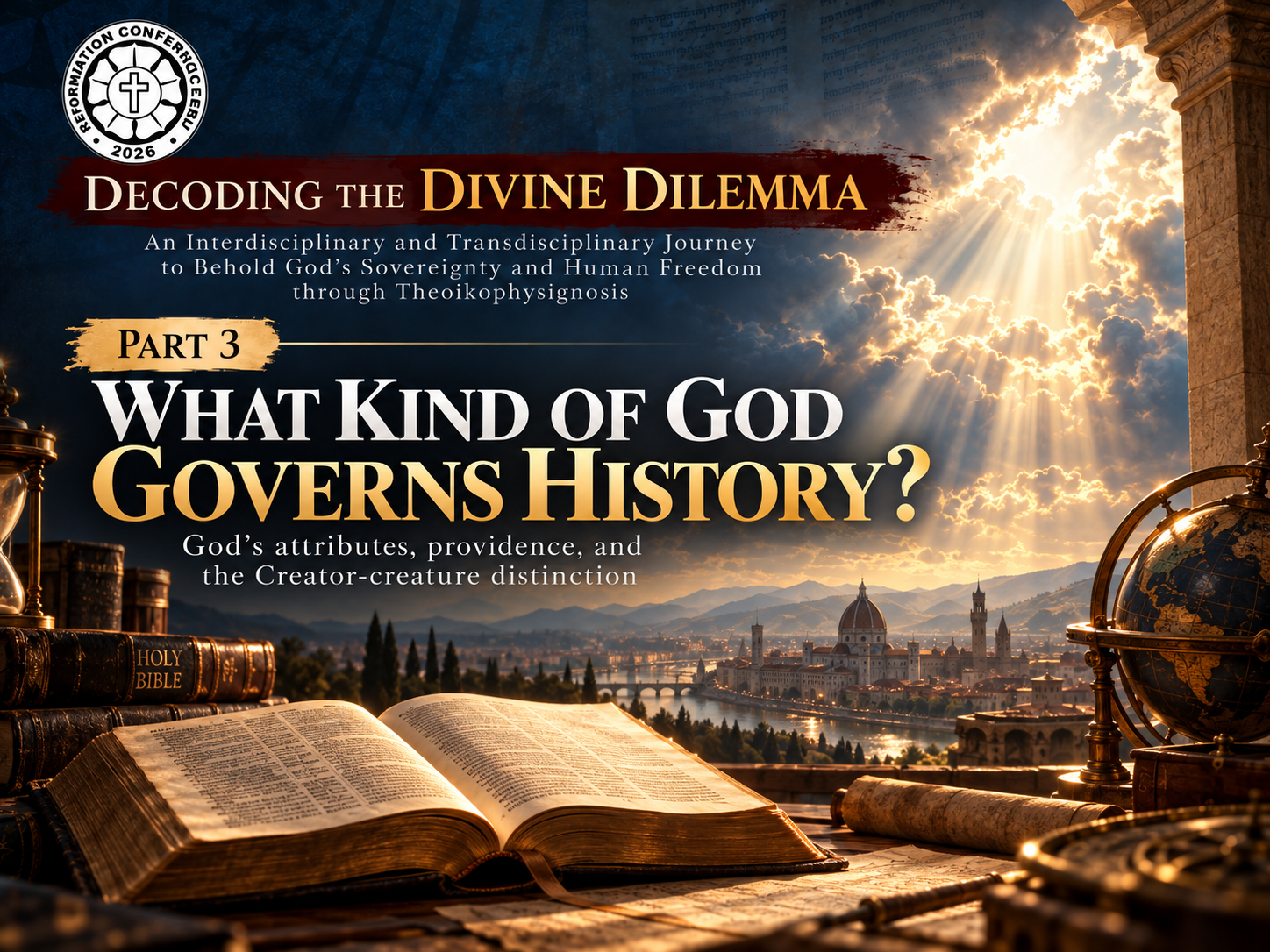
  • DECODING THE DIVINE DILEMMA – Part 3 (Breakout session overview)

    DECODING THE DIVINE DILEMMA – Part 3 (Breakout session overview)

    Part 3: What Kind of God Governs History?

    In Part 2, we saw that Joseph could look at one event and say two things at once:

    “You meant evil against me, but God meant it for good.”
    — Genesis 50:20

    That raises an even deeper question. Before asking how divine sovereignty and human responsibility fit together, perhaps we first need to ask: What kind of God are we talking about? The Reformed tradition begins here, with God Himself.

    The God of Scripture is omniscient. He does not discover our choices as history unfolds.

    He is omnipotent. His purposes are not ultimately frustrated by human actions.

    He is wise and good. His providence is never arbitrary.

    He is holy. Even when sinful actions fall within His sovereign purpose, evil never becomes morally attributable to Him.

    And He is aseitic and transcendent, God does not exist as merely one more cause within the created order, competing with human beings for causal space. That last point is especially important. The Reformers repeatedly insisted on the Creator-creature distinction. God and man are not two agents standing side by side on the same level, each taking a share of control over reality.

    God is God. Creatures are creatures. This is why Reformed theology can speak of God as the primary cause while still affirming genuine secondary causes.

    But the mystery remains. If God perfectly knows, wisely governs, and sovereignly orders history, while remaining perfectly holy, how can sinful human actions truly belong to His providence without making Him the author of sin?

    That is not a small question. It touches the very character of God.

    Perhaps the sovereignty-responsibility dilemma becomes distorted when we imagine divine action and human action as though they were simply two competing forces. If so, we need to think more carefully about causation itself.

    And that is where we turn next.

    Next: Part 4 — Are God and Human Beings Competing Causes?

    —————————————————————————————––
    The relationship between God’s sovereignty and human responsibility is not merely a theological puzzle to be discussed, it touches the very way we understand providence, choice, accountability, suffering, and the unfolding of our lives before God.

    If this short article has stirred in you a desire to explore more deeply how divine sovereignty, human agency, concurrence, and secondary causation may be understood together, continue the journey with us at Reformation Conference Cebu 2026. When selecting your breakout session, choose: DECODING THE DIVINE DILEMMA

    Explore how the Reformed doctrine of providence and divine concurrence provides the theological foundation for thinking about God as the primary cause while human beings remain genuine secondary causes and morally responsible agents. The session will also introduce Theoikophysignosis as an interdisciplinary framework for illuminating this enduring theological tension without reducing mystery to mechanism, or allowing interdisciplinary models to displace the authority and priority of biblical theology.
    Continue the Journey at Reformation Conference Cebu 2026

    𝐁𝐄𝐇𝐎𝐋𝐃 𝐎𝐔𝐑 𝐆𝐎𝐃 𝟐𝟎𝟐𝟔
    October 21–23, 2026
    Hosted by Bradford United Church of Christ, Inc.

    𝗥𝗘𝗚𝗜𝗦𝗧𝗘𝗥 𝗛𝗘𝗥𝗘:
    https://forms.gle/fzGFvqpBn2ceztfs9

    𝗥𝗘𝗚𝗨𝗟𝗔𝗥 𝗥𝗔𝗧𝗘:
    Php 1,000.00
    September 1–October 15

    Registration is inclusive of the conference kit only. Food and accommodation are not included.

    Come and behold the glory of our ever-present God through the faithful proclamation of His Word, Christ-centered worship, and fellowship with His Church.

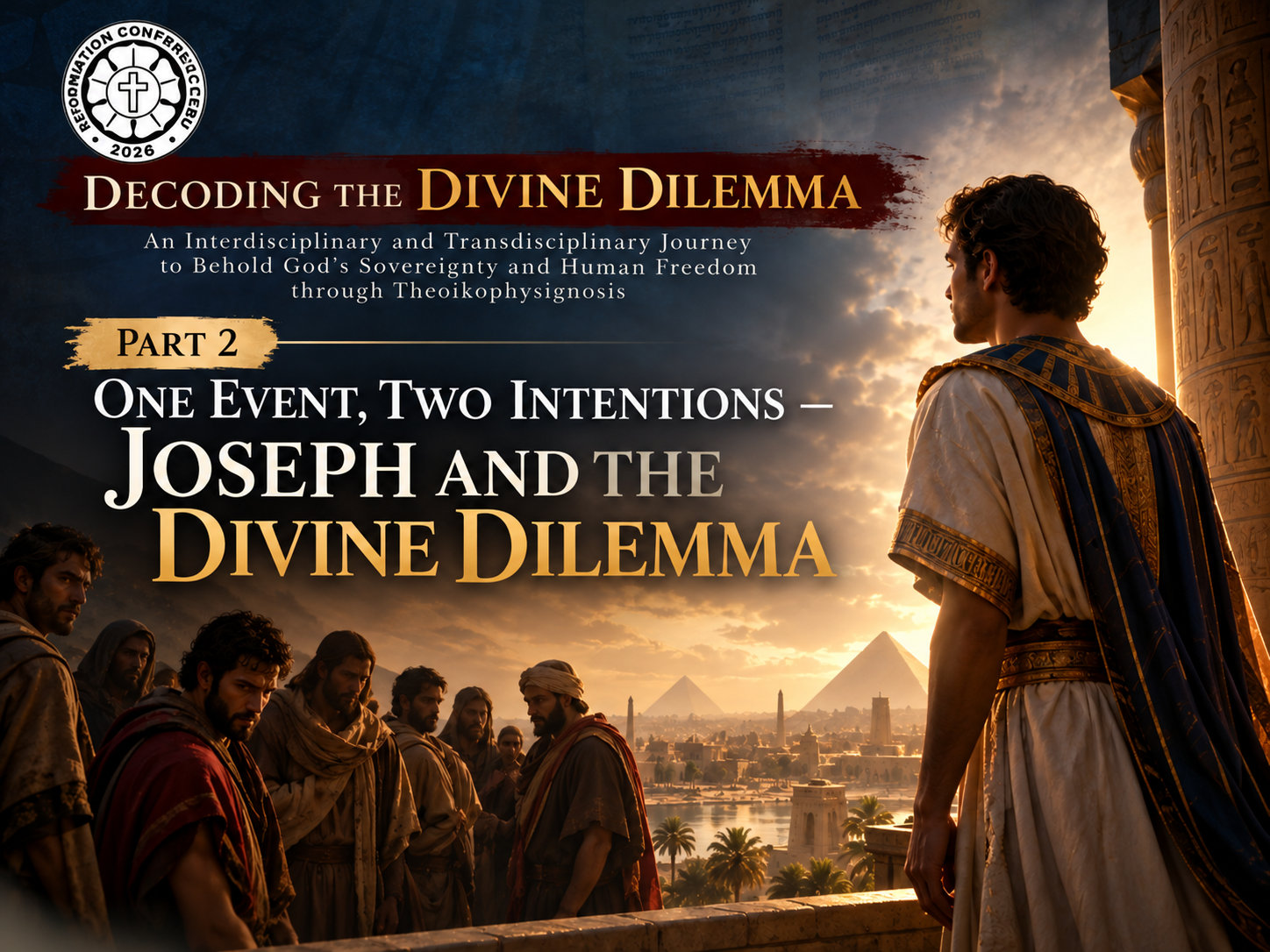
  • DECODING THE DIVINE DILEMMA – Part 2 (Breakout Session overview)

    DECODING THE DIVINE DILEMMA – Part 2 (Breakout Session overview)

    Part 2: One Event, Two Intentions — Joseph and the Divine Dilemma

    In Part 1, we asked a difficult question: If God is sovereign over all things, are human beings still genuinely responsible for what they do? The Reformed tradition has consistently answered yes to both truths. God sovereignly governs history, yet human beings remain real moral agents. Few biblical passages place those two realities beside each other more clearly than Joseph’s words to his brothers:

    “As for you, you meant evil against me, but God meant it for good…”
    — Genesis 50:20

    Joseph does not minimize what his brothers did. Their jealousy, betrayal, deception, and cruelty were genuinely sinful. They acted according to their own intentions, and they were responsible for those actions. But Joseph also refuses to describe the event as though God merely arrived afterward and repaired the damage. The same event that the brothers meant for evil, God meant for good.

    This is deeply consistent with the Reformed doctrine of providence and divine concurrence. As the Reformers insisted, God is not a distant observer of history. He is the primary cause, sovereignly governing all things, while creatures act as genuine secondary causes according to their own wills, desires, and purposes.

    Calvin repeatedly emphasized this point: God’s providence is active, not passive, yet human beings are still accountable for the evil they willingly intend. The Reformed confessions preserve the same balance. God ordains whatsoever comes to pass, yet He is not the author of sin, nor is creaturely responsibility destroyed.

    The evil intention belongs to the brothers. The holy and gracious purpose belongs to God. One event. Two intentions. Two very different moral relationships to that event. And yet both are real.

    Genesis 50:20 does not remove the tension. It places it before us. Perhaps the question is not whether God acts or man acts. Perhaps the deeper question is how divine and human agency relate without becoming rivals.

    Next: Part 3 — What Kind of God Governs History?

    —————————————————————————————–

    The relationship between God’s sovereignty and human responsibility is not merely a theological puzzle to be discussed, it touches the very way we understand providence, choice, accountability, suffering, and the unfolding of our lives before God.

    If this short article has stirred in you a desire to explore more deeply how divine sovereignty, human agency, concurrence, and secondary causation may be understood together, continue the journey with us at Reformation Conference Cebu 2026. When selecting your breakout session, choose: DECODING THE DIVINE DILEMMA

    Explore how the Reformed doctrine of providence and divine concurrence provides the theological foundation for thinking about God as the primary cause while human beings remain genuine secondary causes and morally responsible agents. The session will also introduce Theoikophysignosis as an interdisciplinary framework for illuminating this enduring theological tension without reducing mystery to mechanism, or allowing interdisciplinary models to displace the authority and priority of biblical theology.

    Continue the Journey at Reformation Conference Cebu 2026

    𝐁𝐄𝐇𝐎𝐋𝐃 𝐎𝐔𝐑 𝐆𝐎𝐃 𝟐𝟎𝟐𝟔

    October 21–23, 2026

    Hosted by Bradford United Church of Christ, Inc.

    𝗥𝗘𝗚𝗜𝗦𝗧𝗘𝗥 𝗛𝗘𝗥𝗘:
    https://forms.gle/fzGFvqpBn2ceztfs9

    𝗥𝗘𝗚𝗨𝗟𝗔𝗥 𝗥𝗔𝗧𝗘:
    Php 1,000.00
    September 1–October 15

    Registration is inclusive of the conference kit only. Food and accommodation are not included.

    Come and behold the glory of our ever-present God through the faithful proclamation of His Word, Christ-centered worship, and fellowship with His Church.


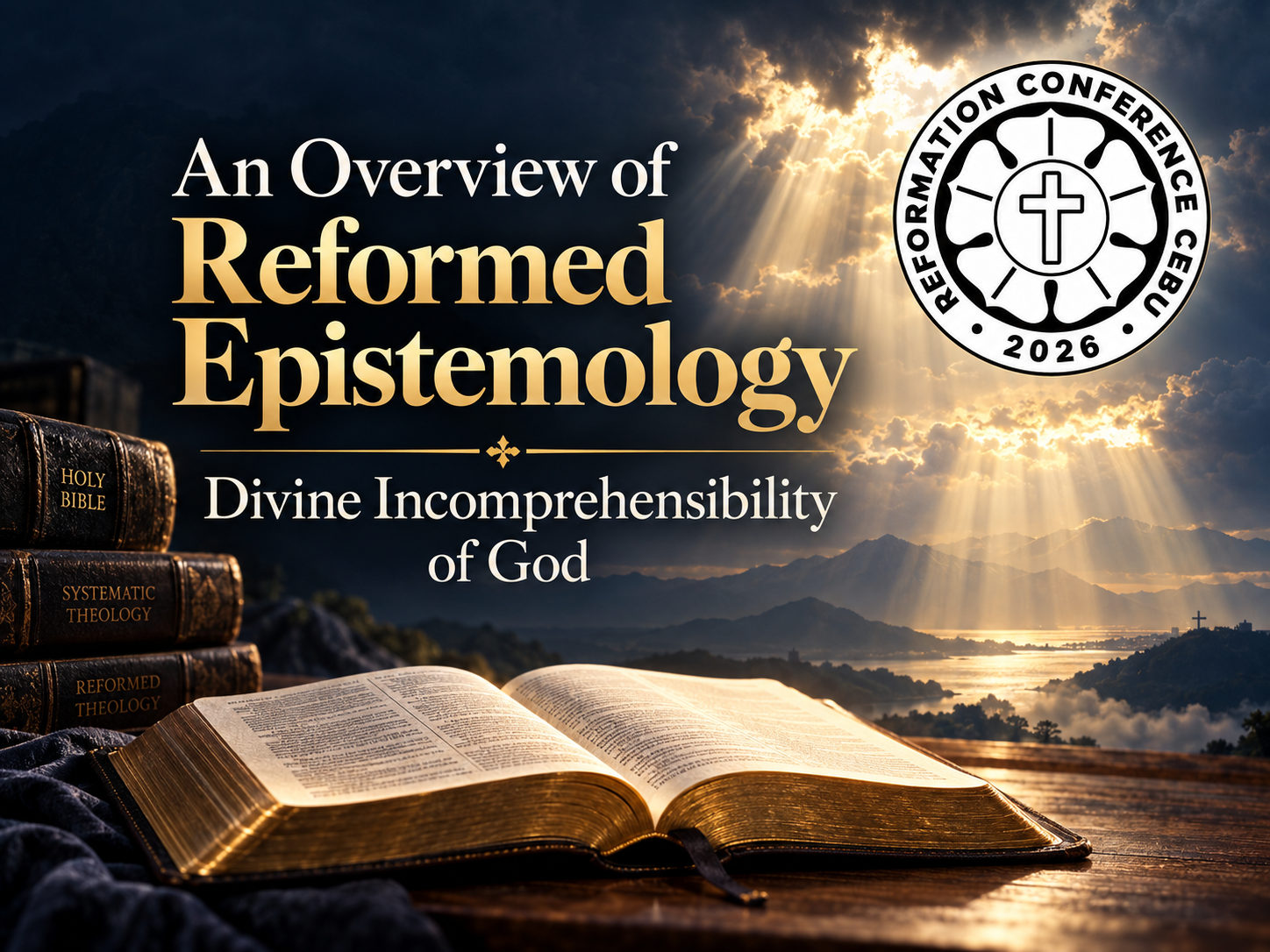
  • Reformed Epistemology: Divine Incomprehensibility of God (Breakout session overview)

    Reformed Epistemology: Divine Incomprehensibility of God (Breakout session overview)

    God is beyond our full comprehension because there is an infinite distinction between the Creator and His creation. God is infinite, while human beings are finite. We can truly know God as He reveals Himself, yet we can never fully comprehend His infinite essence. Our knowledge of God can therefore be true without being exhaustive. Reformed theology rejects both rationalism, which attempts to exhaustively explain God, and agnosticism, which denies that God can be truly known. If God is incomprehensible in His essence, in what sense can our knowledge of Him be true and certain? How does distinguishing between knowing and comprehending God shape the limits of theological knowledge?

    God graciously makes Himself known to humanity. He places a natural awareness of Himself within every human heart and displays His power and glory through creation. Yet sin has distorted human understanding, so general revelation alone does not provide saving knowledge. We need Holy Scripture, which, borrowing John Calvin’s well-known analogy, functions like spectacles that enable us to see more clearly the God who has already made Himself known through creation. God accommodates Himself to our limited understanding, communicating in ways we can comprehend. Through the Holy Spirit, our hearts and minds are enabled to understand, receive, and believe Scripture, which ultimately points us to Jesus Christ, the Redeemer. How does divine accommodation demonstrate God’s condescension without diminishing His transcendence? Why is special revelation necessary if humanity already encounters God through creation? What role does the Holy Spirit play in enabling us to understand, receive, and believe Scripture unto salvation?

    Our proper response to knowing God is humility and loving faith. When we encounter God’s holiness, we recognize our sinfulness and spiritual poverty. True faith is therefore more than intellectual knowledge or religious ritual; in Calvin’s language, it is pietas, a reverence for God joined with heartfelt love, trust, and devotion. Recognizing our helplessness destroys pride and self-reliance and leads us to trust completely in the grace of Christ. Why should genuine knowledge of God produce humility rather than merely intellectual knowledge? How does human sinfulness affect our ability to know God apart from grace? If salvation depends entirely upon God’s grace, what grounds remain for human boasting? Finally, how should knowing God’s holiness, grace, and self-revelation transform the believer’s worship, faith, and obedience?

    ———————————————————————————————————

    The divine incomprehensibility of God is not merely a theological truth to be understood; it should shape the way we approach God, His Word, and the whole task of theology. We cannot comprehend God exhaustively, yet we can know Him truly because He has graciously made Himself known. If this overview has awakened in you a desire to understand more deeply how finite human beings can truly know the infinite God, continue the journey with us at Reformation Conference Cebu 2026.

    When selecting your breakout session, choose: REFORMED EPISTEMOLOGY: DIVINE INCOMPREHENSIBILITY OF GOD

    Explore the biblical and Reformed teaching concerning how finite human beings can truly know the infinite God while never comprehending Him exhaustively. Discover how the Creator-creature distinction, divine revelation, accommodation, human sinfulness, and the illuminating work of the Holy Spirit shape our knowledge of God—and how these truths should lead us toward greater humility, faith, worship, and obedience.

    Continue the Journey at Reformation Conference Cebu 2026

    𝐁𝐄𝐇𝐎𝐋𝐃 𝐎𝐔𝐑 𝐆𝐎𝐃 𝟐𝟎𝟐𝟔

    October 21–23, 2026

    Hosted by Bradford United Church of Christ, Inc.

    𝗥𝗘𝗚𝗜𝗦𝗧𝗘𝗥 𝗛𝗘𝗥𝗘:
    https://forms.gle/fzGFvqpBn2ceztfs9

    𝗥𝗘𝗚𝗨𝗟𝗔𝗥 𝗥𝗔𝗧𝗘:
    Php 1,000.00
    September 1–October 15

    Registration is inclusive of the conference kit only. Food and accommodation are not included.

    Come and behold the glory of the infinite and incomprehensible God who graciously makes Himself known through His creation, His Word, and supremely through His Son, Jesus Christ.

  • Decoding the Divine Dilemma

    Decoding the Divine Dilemma

    Breakout session: Decoding the Divine Dilemma

    This article introduces one of the breakout conversations for Behold Our God 2026. It is designed for sharing with church members, ministry leaders, and students who want to think more carefully about the doctrine of God.

    The breakout sessions provide space to slow down, ask better questions, and connect biblical truth to worship, preaching, discipleship, and church life.

    Share this article as a simple invitation for others to prepare for the conference and join the discussion on October 21-23, 2026.

    Register for Behold Our God 2026

  • Divine Wrath and Propitiation

    Divine Wrath and Propitiation

    Breakout session: Divine Wrath and Propitiation

    This article introduces one of the breakout conversations for Behold Our God 2026. It is designed for sharing with church members, ministry leaders, and students who want to think more carefully about the doctrine of God.

    The breakout sessions provide space to slow down, ask better questions, and connect biblical truth to worship, preaching, discipleship, and church life.

    Share this article as a simple invitation for others to prepare for the conference and join the discussion on October 21-23, 2026.

    Register for Behold Our God 2026

  • Divine Incomprehensibility and Revelation

    Divine Incomprehensibility and Revelation

    Breakout session: Divine Incomprehensibility and Revelation

    This article introduces one of the breakout conversations for Behold Our God 2026. It is designed for sharing with church members, ministry leaders, and students who want to think more carefully about the doctrine of God.

    The breakout sessions provide space to slow down, ask better questions, and connect biblical truth to worship, preaching, discipleship, and church life.

    Share this article as a simple invitation for others to prepare for the conference and join the discussion on October 21-23, 2026.

    Register for Behold Our God 2026

  • Divine Fatherhood and Adoption

    Divine Fatherhood and Adoption

    Breakout session: Divine Fatherhood and Adoption

    This article introduces one of the breakout conversations for Behold Our God 2026. It is designed for sharing with church members, ministry leaders, and students who want to think more carefully about the doctrine of God.

    The breakout sessions provide space to slow down, ask better questions, and connect biblical truth to worship, preaching, discipleship, and church life.

    Share this article as a simple invitation for others to prepare for the conference and join the discussion on October 21-23, 2026.

    Register for Behold Our God 2026